Have you ever looked out the window at the rain or the blazing sun and thought, “Should I brave the weather for a walk, or hop on my stationary bike?” It’s the classic indoor versus outdoor dilemma, and it boils down to more than just convenience.
We often categorize exercise as “good” or “bad,” but fitness experts know the truth: every activity serves a unique purpose. Walking is humanity’s most fundamental movement. It’s gentle, accessible, and vital. Riding a stationary bike, on the other hand, is a modern marvel of efficiency, allowing you to control every variable of your workout from a single seat.
So, when we ask, is riding a stationary bike as good as walking, we aren’t looking for a single winner. We’re looking for the right tool for your body and your goals. As a fitness expert, I’m here to break down the metrics, from joint impact to the way your muscles fire, to give you the definitive answer.
The Expert Verdict: They Are Different, Not Better or Worse
Before we dive into the specific comparisons, let’s settle the main question right away.

There is no single winner in the battle between the stationary bike and walking. Both are powerful tools for cardiovascular health, weight management, and mental wellbeing.
The stationary bike offers superior cardiovascular intensity and joint protection because it is a low impact, non weight bearing exercise. This makes it a powerhouse for calorie burn and aggressive heart rate training without the wear and tear.
However, walking is essential for bone density and functional, weight bearing fitness. Walking forces your skeleton to bear your weight, which is the primary mechanism for strengthening bones and preventing age related issues like osteoporosis. It also promotes real world balance and stability.
Your choice of activity depends entirely on your specific fitness goals:
- Goal: Joint Pain or Recovery? Choose the stationary bike.
- Goal: Bone Health and Balance? Choose walking.
- Goal: High Intensity Calorie Burn? Choose the stationary bike.
To truly understand which exercise best serves you, we need to compare them based on four key metrics: Calorie Burn, Joint Impact, Muscle Recruitment, and Cardio Health.
Calorie Burn and Intensity: The Effort Equation
When people want to know is riding a stationary bike as good as walking, they are often asking about one thing: how many calories am I burning?
While walking is excellent for sustained, moderate activity, the stationary bike simply allows you to push harder, for longer, with less perceived effort, leading to a higher potential caloric output per minute.
Think of it this way: to increase your burn while walking, you have to dramatically increase your pace, find a steep hill, or start jogging. To increase your burn on a stationary bike, you just click a button to add resistance.
Stationary Bike vs. Walking: Intensity at a Glance
| Metric | Stationary Bike (High Resistance/Speed) | Walking (Brisk Pace) |
|---|---|---|
| Calorie Expenditure | Higher potential per minute due to non weight bearing effort and high resistance. | Moderate, but consistent. Highly dependent on terrain and incline. |
| Intensity Control | Excellent (instant digital resistance control). Perfect for structured intervals. | Good (pace, incline, or weighted vest). Pace is harder to maintain perfectly. |
| Expert Term | Focus on achieving a high METs (Metabolic Equivalent of Task) score. | Focus on maintaining Target Heart Rate Zone (THRZ). |
Maximizing Output: How to Get the Most from Your Workout
Simply sitting on a bike or strolling around the neighborhood won’t maximize your results. You have to push yourself strategically.
For the stationary bike, the key is High Intensity Interval Training (HIIT). Because the bike is low impact, you can alternate periods of all out sprinting (high resistance) with periods of recovery. A typical HIIT bike workout can easily surpass the calorie burn of an hour long brisk walk in just 20 to 30 minutes, simply because you can sustain Zone 4 and Zone 5 heart rates (Vigorous and Maximum Intensity) safely.
For walking, the secret is incline and speed. Walking up a steep hill or even using the incline function on a treadmill dramatically increases the amount of muscle required and elevates your heart rate. Power walking, or walking with a brisk, athletic pace, also helps you maintain your Target Heart Rate Zone (THRZ) more consistently. If you can’t get outside, try adding five minutes of maximum incline to every thirty minutes of walking.
Biomechanics and Joint Health: Low Impact vs. Weight Bearing Necessity
Here is where the comparison of riding a stationary bike as good as walking truly diverges. These two exercises stress the body in fundamentally different ways.
The Stationary Bike Advantage: Zero Impact Training
The stationary bike is the gold standard for zero impact training. Since you are seated, your body weight is supported by the machine, not absorbed by your skeletal structure.
When your feet hit the pavement during a walk, your knees, hips, and lower back absorb a force equal to 1.2 to 1.5 times your body weight. Over time and miles, this impact can aggravate existing conditions like runner’s knee or osteoarthritis.
For individuals dealing with:
- Chronic joint pain (especially in the knees and ankles).
- Post injury rehabilitation.
- Significant body weight where walking might be painful.
The bike is unequivocally the superior choice. You get all the cardiovascular benefits without the resulting pain.
Commercial Bridge: If you are prioritizing maximum back and joint support, consider investing in a Recumbent Bike. These bikes feature a large seat and backrest, placing you in a semi reclined position that completely eliminates lower back strain, making them ideal for older adults or those with spine issues.
The Walking Advantage: Essential for Bone Density
While the bike offers joint protection, this very protection is its biggest functional drawback. If you are comparing is riding a stationary bike as good as walking for bone health, walking wins, hands down.
Walking is a weight bearing exercise. Weight bearing simply means that your body must support its own weight against gravity during the activity. This consistent, low level impact sends micro signals through your bones, stimulating osteoblasts (bone building cells) to deposit new tissue.
This mechanical stress is critical for:
- Preventing Osteoporosis: Regular walking is one of the best defenses against age related bone density loss.
- Maintaining Functional Mobility: It trains your body to stabilize and balance itself against gravity, which is essential for preventing falls and maintaining agility as you age.
Furthermore, walking engages the small, intricate stabilizing muscles in your feet and ankles. These muscles are often neglected in seated activities but are vital for everyday balance and coordination. If you rely only on a bike, you miss out on this functional foundational work.
Muscle Engagement: Targeting Different Lower Body Groups
Both activities use your legs, but the primary muscles doing the heavy lifting are different, mostly due to the angle of the hip and knee joint during the motion. Understanding this difference is key to customizing your routine.
Stationary Biking: The Quad and Glute Builder
When you ride a stationary bike, especially with high resistance, the motion creates a distinct emphasis on the front of your leg and your rear.
- Primary Movers (Front of the Leg): The Quadriceps are the stars of the show. They power the downstroke of the pedal, driving the resistance forward.
- Primary Movers (Rear): The Glutes (specifically the gluteus maximus) are heavily engaged when pushing down, especially if you focus on squeezing them at the bottom of the stroke.
- Secondary Movers: The Hamstrings and Calves assist, particularly if you are clipped into the pedals and actively “pulling up” on the back half of the revolution.
Expert Tip: Cycling is excellent for strength endurance in the legs. You’re teaching your muscles to produce sustained power under continuous load, making them incredibly resistant to fatigue.
Walking: The Posterior Chain and Stabilizer Workout
Walking involves more of a push off and a hip extension, which naturally recruits the muscles on the back side of your body.
- Primary Movers (Rear of the Leg): The Hamstrings and Calves are heavily utilized as you push your body forward, acting like springs to propel you.
- Primary Movers (Hips): The Glutes are crucial for hip extension, which is the main movement that drives your gait.
- Crucial for Stabilization: Walking requires continuous, subtle engagement from your core and smaller hip flexor muscles to maintain upright posture and prevent lateral sway. This is the definition of functional strength, muscle that helps you in everyday life.
If your goal is to build powerful glutes and quads for sports or sprinting, the resistance of the bike might be more effective. If your goal is everyday stability, lower back support, and overall functional fitness, walking is irreplaceable.
Cardiovascular Fitness: VO2 Max and Heart Health

The core benefit of both activities is their ability to elevate your heart rate and improve your overall Cardiovascular Fitness, the health of your heart, lungs, and blood vessels. Both walking and stationary biking are effective at improving your VO2 max (the maximum rate of oxygen your body can use during exercise), which is one of the best indicators of longevity and athletic performance.
However, the way they achieve this improvement differs in intensity zones.
Biking’s Edge: Accessing Vigorous Intensity (Zone 4)
Because the bike is non weight bearing and low impact, it allows almost anyone to reach and sustain a high heart rate for longer periods without the immediate risk of muscle strain or impact injury.
This means the bike is often the most efficient way to train in Zone 4 (Vigorous Intensity). This high intensity training is what drives massive physiological adaptation, drastically improving your body’s ability to use oxygen (VO2 max) and burn calories quickly. If you want to see fast improvements in your endurance capacity, the bike gives you an easier path to that vigorous effort level.
Walking’s Role: Building Base Endurance (Zone 2)
While walking can be high intensity (if you run up a hill), it excels at Zone 2 (Steady State) training. Zone 2 is a moderate, conversational pace where you can easily sustain the effort for 60 to 90 minutes.
Why is Zone 2 important? It’s ideal for:
- Metabolic Health: Zone 2 is the most effective intensity for teaching your body to burn stored fat for fuel. This is crucial for long term weight management and improving insulin sensitivity.
- Base Endurance: It builds your foundational cardiovascular fitness without taxing your joints or central nervous system, making it easier to recover from.
So, when considering is riding a stationary bike as good as walking for your heart, the answer is yes, but they serve different purposes. Use the bike for short, intense bursts (speed), and use walking for long, easy efforts (endurance).
Context and Commercial Considerations: Cost, Convenience, and Gear
Beyond the physiology, the “best” exercise often comes down to practicality. If you can’t be consistent, the most technically efficient workout is useless.
The Convenience Factor
Biking:
- Weather Proof: Never skip a workout because of rain, snow, or excessive heat.
- Dual Tasking: Easily watch a movie, read a book, or take a work call while exercising.
- Structured Environment: Ideal for following virtual spin classes or structured training plans, which boost motivation.
Walking:
- Highly Accessible: Requires no special equipment or setup, just a pair of shoes and a door.
- Mental Clarity: The sensory input of nature or new surroundings is proven to be superior for mental health and stress relief compared to staring at a wall indoors.
- Social: Easily combined with conversation, making it a great way to connect with friends or family.
Commercial Nudge: Choosing the Right Equipment
Understanding the equipment helps you choose the right path. When you ask is riding a stationary bike as good as walking, you’re often asking, “Is my bike worth the investment?”
Stationary Bike Recommendations (Commercial Intent):
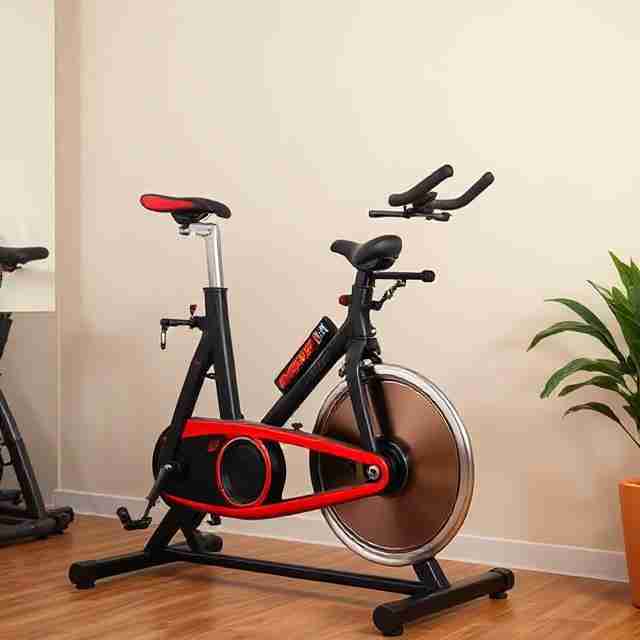
- Spin/Upright Bikes: Best for those focused on high intensity, structured classes, and minimizing footprint. They mimic the feel of an outdoor road bike.
- Recumbent Bikes: Ideal for maximum support, comfort, and safety. These are recommended for anyone with chronic back issues or those focused purely on heart health maintenance.
- Air Bikes (Fan Bikes): A Total Body calorie killer. These use moving handlebars, engaging the upper body and resulting in one of the highest possible calorie burns per minute.
Walking Recommendation:
Since walking is a weight bearing exercise that directly affects your skeletal structure, your only essential gear is proper footwear. Focus on investing in high quality, supportive athletic shoes and potentially custom or orthopedic insoles. This is the best way to prevent common walking injuries and ensure you maintain joint health during your functional fitness routine.
The Final Takeaway: Cross Training for Comprehensive Health
If you came here looking for a tiebreaker, here it is: The absolute best solution is to use both.
For the vast majority of people, optimal health is achieved through cross training, which means integrating different types of movement into your routine.
- Integrate the Stationary Bike for low impact intensity and joint protection. Use it on days when your joints feel tired, when the weather is poor, or when you only have 20 minutes and need a massive cardio hit.
- Integrate Walking for bone health, mental clarity, and functional mobility. Make a commitment to get outside for a walk several times a week, especially as you age, to ensure your body is receiving the essential weight bearing stress it needs.
The truth about fitness is that the most technically advanced, high scoring workout isn’t the one that gives you results. The best exercise is the one that aligns with your current fitness goal and that you can perform consistently.
Don’t let the technical debate over is riding a stationary bike as good as walking keep you from moving. If you love the bike, ride it. If you love the sidewalk, walk it. But remember to add the other activity in occasionally to ensure your fitness routine is truly comprehensive. Your body will thank you for the variety, and you’ll build strength that lasts a lifetime.
About the Author